

















01 Where Did Ouk Chaktrang Come From?
Ancient OriginsOuk Chaktrang developed as a Cambodian form of the wider Asian chess tradition. Its ultimate ancestry connects to the ancient history of chess across Asia, while its distinctive modern identity developed organically within Khmer culture over centuries.
The wider chess family is generally traced to ancient Indian chess traditions, particularly chaturanga, which developed during the first millennium CE. From early Indian chess traditions, related games spread and evolved across Asia, producing distinctive regional forms. Historical connections between ancient India and mainland Southeast Asia were extensive, fostering trade, art, and intellectual exchange.
Ouk should not be described simply as an isolated invention created in total separation from the rest of Asian chess. At the same time, it must never be dismissed as merely "Thai chess played in Cambodia." Cambodian Ouk possesses its own ancient terminology, distinctive royal leaps, deep archaeological roots, and cultural history that distinguish it from modern Thai Makruk.
2. The Meaning of "Chaktrang" (ចត្រង្គ)
The word Chaktrang (also transliterated as Chatrang or ចត្រង្គ) is an authentic part of the centuries-long linguistic history of chess:
- Sanskrit Chaturanga: Referred directly to the four traditional divisions of an ancient royal army: infantry (pawns / Trey), cavalry (knights / Ses), elephants (generals / Koul), and chariots (boats / Touk).
- Linguistic Migration: The ancient term developed through various civilizations, evolving into Persian chatrang and Arabic shatranj.
- Khmer Adaptation: The Cambodian name Ouk Chaktrang preserves this classical terminology directly in Khmer script (អុកចត្រង្គ), cementing an unbroken line to Asian chess antiquity.
02 Chess in Ancient Cambodia & The Angkor Empire
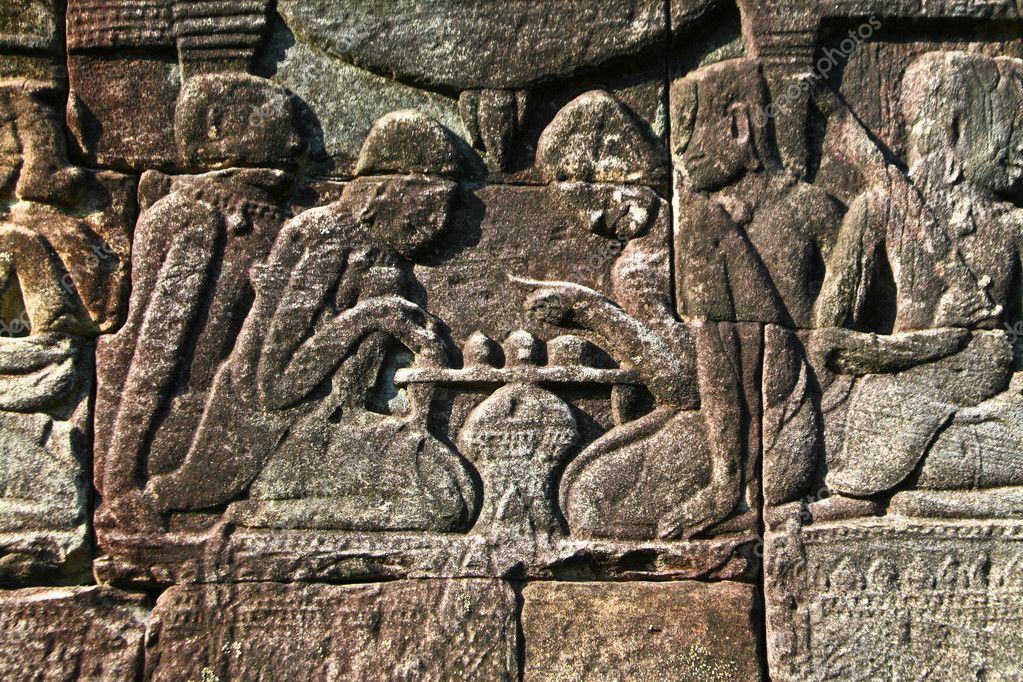
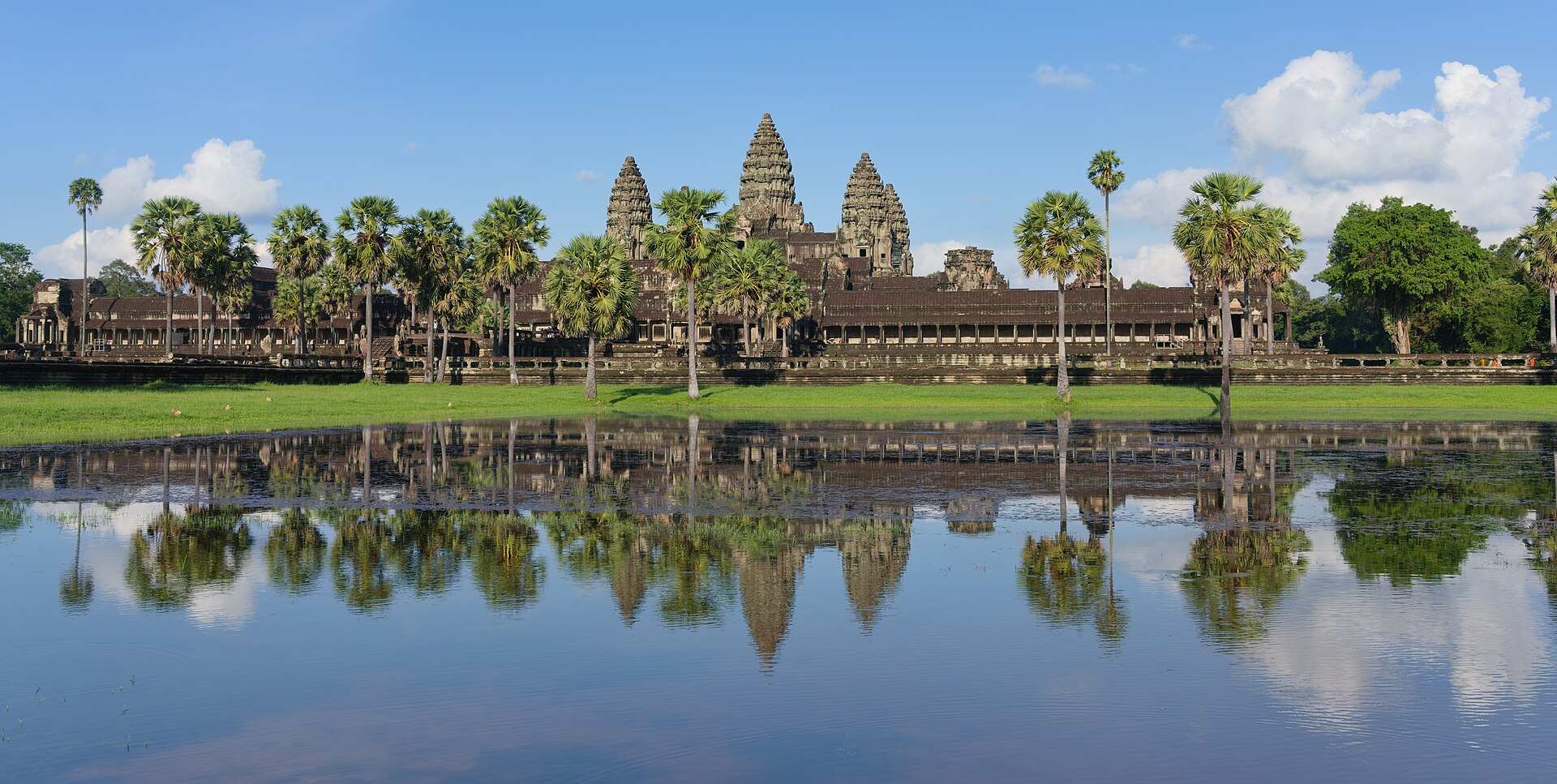
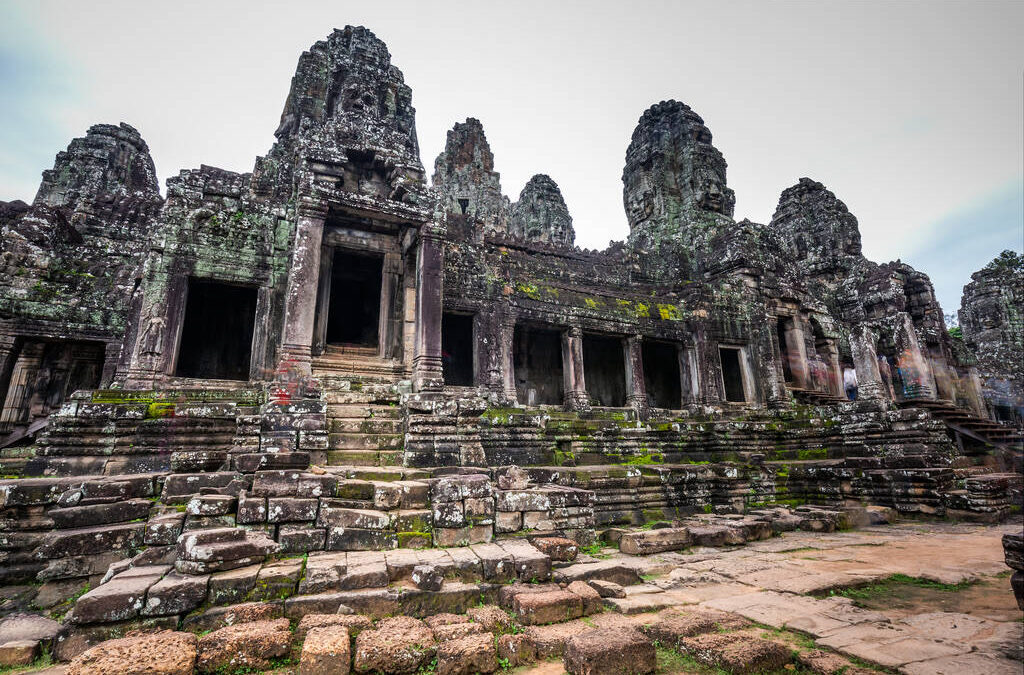
12th Century ArchaeologyHow long has chess been played in Cambodia? The strongest archaeological evidence shows that chess-like board games were actively played in the Khmer world during the glorious Angkor Empire (Khmer Empire).
Stone bas-reliefs dating to approximately the 12th century depict individuals seated around a checkered board, engrossed in strategic play. The most renowned evidence originates from the reign of King Jayavarman VII (late 12th to early 13th century) at the majestic Bayon Temple in Angkor Thom. As documented by the APSARA National Authority, the bas-reliefs of Bayon are celebrated because they do not merely portray divine pantheons and royal conquests, but provide invaluable, authentic snapshots of everyday Khmer life, commerce, and recreation.
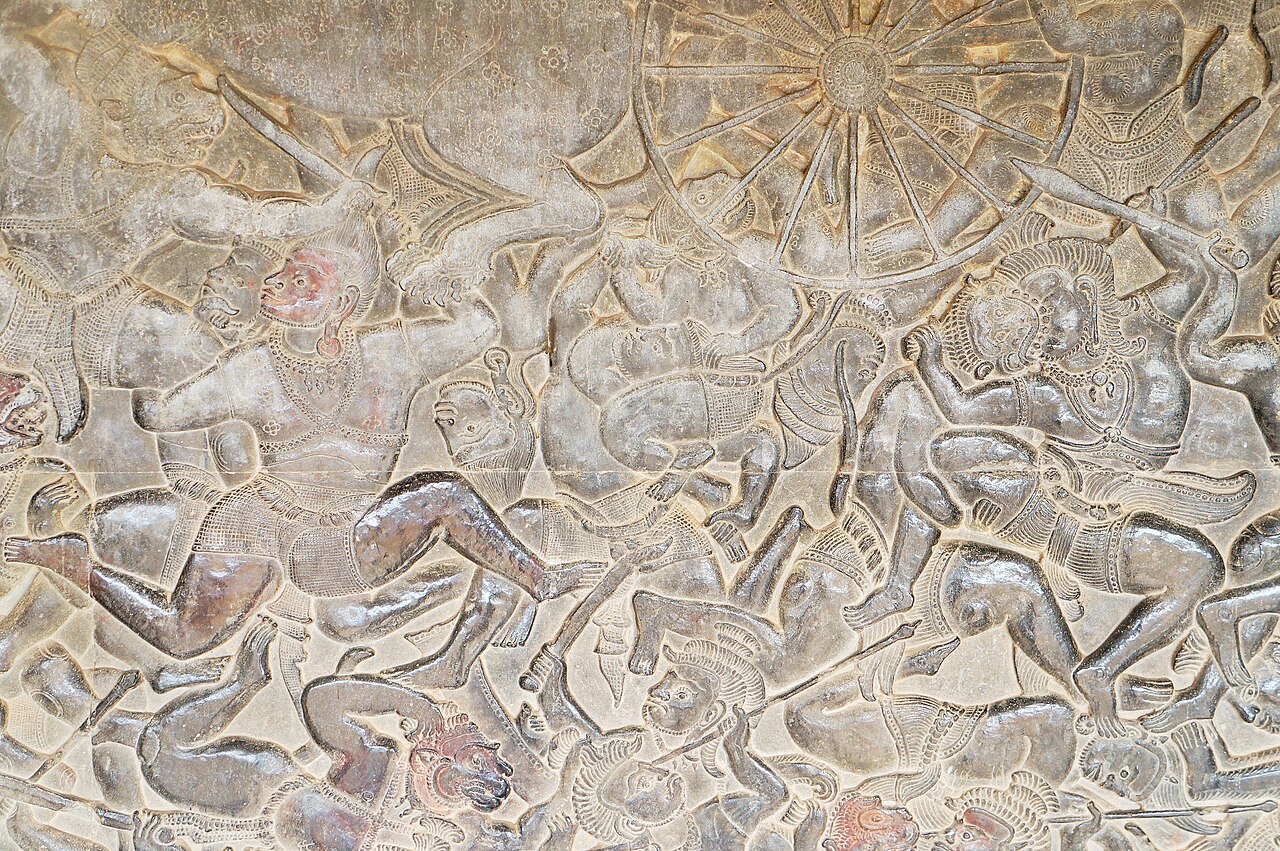
What the Bayon Carvings Tell Us — And What They Do Not
- Khmer people played strategic board games closely resembling chess.
- Chess-like games were known and played during the Angkorian period.
- Strategic games were part of the cultural and intellectual life of the Khmer Empire.
- The complete written rulebook used by Angkorian players.
- Whether piece movement, promotion, and counting limits were identical to modern Ouk.
- Whether the ancient Angkorian game was already titled "Ouk Chaktrang."
6. Was Ouk Invented at Angkor?
There is no reliable historical record identifying an individual inventor of Ouk, nor an exact calendar year of invention. Responsible history concludes: A Cambodian chess tradition has very old roots, with archaeological evidence for chess-like games in the Khmer world by the Angkor period, while the exact evolution from those ancient games into modern Ouk Chaktrang remains a continuous cultural development rather than a single documented invention event.
03 The Southeast Asian Chess Family & Pieces
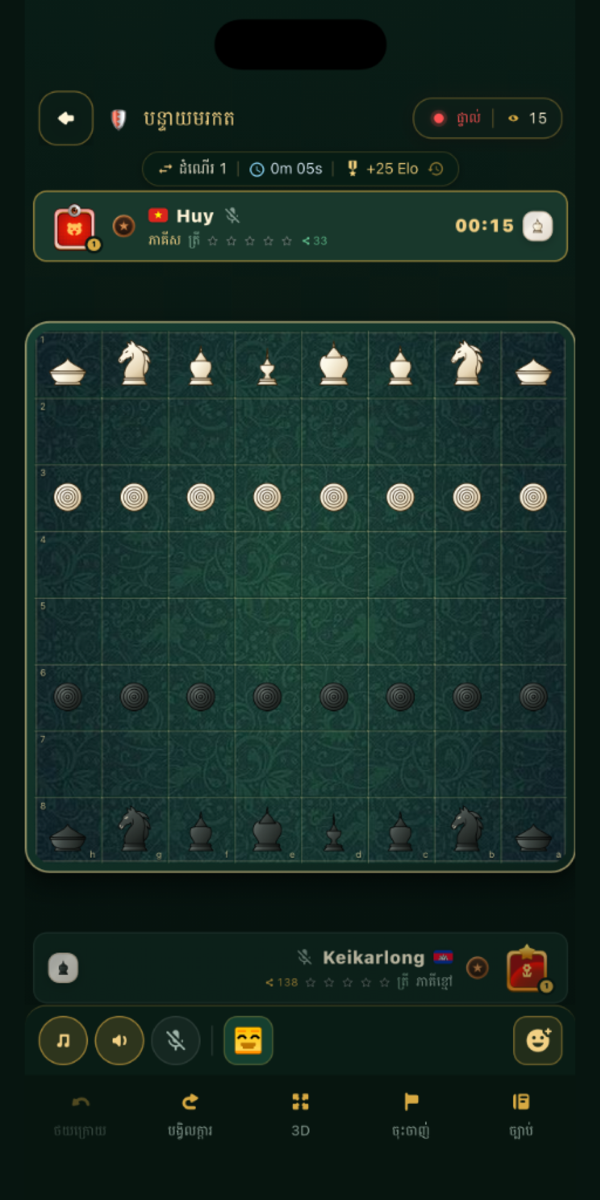
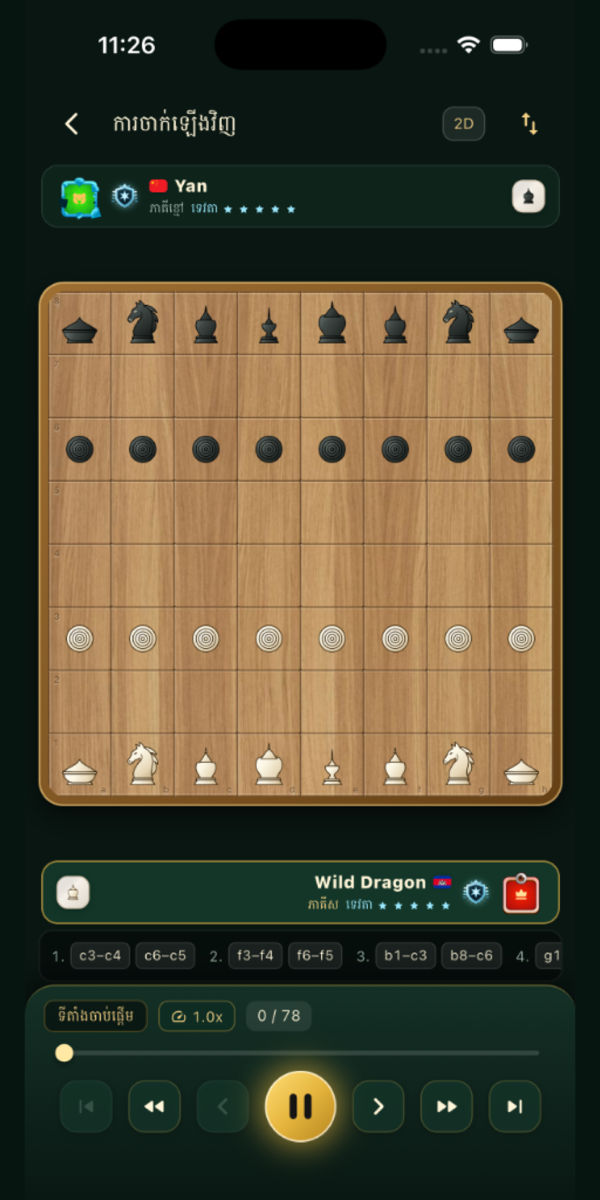
Makruk & Western ComparisonOuk belongs to the Southeast Asian regional branch of chess. Its closest sibling is Thailand's Makruk. Both share an uncheckered 8×8 board, 16 pieces per player, short-range generals (Koul), pawns deployed on the third rank, and intricate endgame counting laws.
However, Cambodian Ouk maintains key historic distinctions:
- King's Initial Leap: In Ouk, an unmoved, unthreatened King can make a knight-like leap on its very first move.
- Neang (Queen) First Leap: The Neang may advance two squares straight ahead on its opening move.
- Honor Counting Nuances: Distinct counting thresholds for Board Honor and Piece Honor exist under traditional Khmer codes.
10. The Traditional Cambodian Pieces & Symbolism
The traditional names reflect ancient Cambodian military, social, and riverine geography:
11. Why Ouk Looks Different From Western Chess
Unlike Western chess, which introduced high-velocity queens and bishops in late medieval Europe, Ouk preserved the strategic, positional pacing of ancient Asian chess. With pawns starting on the third rank, clash points happen earlier, but without long-range queens, victory requires patient pawn structure mastery, king safety, and rigorous endgame counting.
04 Ouk in Khmer Culture, Oral Transmission & Kar Ouk
Living HeritageThroughout centuries, Ouk thrived through oral, familial, and community transmission. Rather than relying on printed manuals, players absorbed opening strategies, tactical proverbs, and endgame counting limits from village elders, local pagodas, street-side coffee houses, and festive gatherings.
Ouk is intrinsically linked to major Cambodian cultural festivals, particularly Bon Om Touk (the Water and Moon Festival) and Khmer New Year (Sankranta). Its cultural reach transcends modern political borders: among Khmer communities in the Mekong Delta of southern Vietnam (Khmer Krom), the game has been played for generations under the local name cờ ốc.
12. The Meaning of "Ouk" & 13. The Variant "Kar Ouk"
The monosyllabic term "Ouk" is the traditional verbal announcement made by a player when placing the opponent's king in check. It is simultaneously an action verb, a warning, and the popular name of the game itself.
Cambodian chess heritage also includes unique regional variants such as Kar Ouk. In Kar Ouk, the standard checkmate objective is replaced: the first player to deliver a legal check (Ouk!) against the enemy king wins the game immediately. This reflects the historical diversity of Khmer chess play.
05 Modern Standardization & The Historic 2023 SEA Games
Olympic SportWhile Ouk existed for centuries as a traditional social game, modern competitive athletics required codified rules, standardized time controls, and formal referee training.
- 3–4 April 2008 National Milestone: The National Olympic Committee of Cambodia (NOCC) and the Cambodian Chess Association (CCA) codified a standardized ruleset and hosted Cambodia's first nationwide championship. This milestone established uniform board dimensions, piece leap definitions, promotion protocols, and strict endgame counting limits.
- Cambodia Chess Federation (CCF): Established official coaching, arbiter accreditation, and annual national championship ladders.
17. Ouk Chaktrang at the 2023 Southeast Asian Games (32nd SEA Games)
The pinnacle of modern Ouk history arrived in May 2023 when Cambodia hosted the 32nd SEA Games. For the first time in Olympic-affiliated multi-sport history, Ouk Chaktrang was contested as an official medal sport. Held at the Royal University of Phnom Penh (RUPP) Indoor Hall between 29 April and 9 May 2023, athletes from seven Southeast Asian nations battled across seven championship categories:
20. Modern Competitions Today & 21. Nokor Sankranta
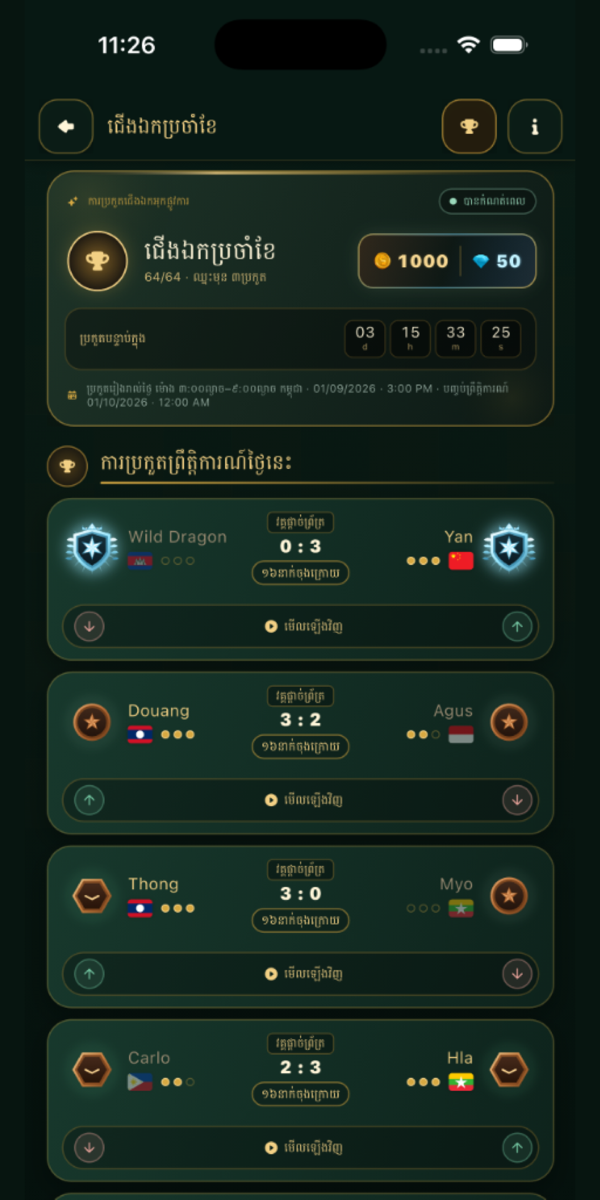
As reported by Agence Kampuchea Presse (AKP), Cambodia's national Ouk Chaktrang championship has been organized annually since 2018. The 2024 national competition was contested in January 2025 in Phnom Penh. Concurrently, public tournaments remain a centerpiece of cultural gatherings, including the celebrated tournament at Nokor Sankranta in Phnom Penh, uniting grandmasters, veterans, and youth competitors.
06 A Chronological Timeline of Ouk Chaktrang
Historical MilestonesThis timeline compiles the documented milestones of Cambodian chess, bridging ancient archaeological evidence with modern international competition:
| Period / Date | Era Category | Documented Historical Event & Significance |
|---|---|---|
| Ancient Period | Chaturanga | Chess traditions emerge in ancient South Asia, based on the four divisions of the royal army. |
| 1st Millennium CE | Pan-Asian | Early chess traditions migrate along maritime and inland trade corridors, evolving into distinctive regional Asian forms. |
| Angkor Period (9th–15th C.) | Khmer Empire | Chess-like strategic board games are played within the Khmer civilization and represented in temple art. |
| Late 12th Century | Archaeology | Reign of King Jayavarman VII. Temple bas-reliefs at Bayon in Angkor Thom depict players engaged in a chess-like board game. |
| Subsequent Centuries | Cultural Transmission | The Cambodian chess tradition is transmitted across generations of Khmer society through oral practice and community games. |
| Traditional Era | Festivals | Ouk becomes a staple of festival life (Bon Om Touk, Khmer New Year) and flourishes among Khmer Krom communities in southern Vietnam as cờ ốc. |
| 3–4 April 2008 | Standardization | First nationwide tournament following a standardized ruleset codified by the National Olympic Committee of Cambodia and the Cambodian Chess Association. |
| 2018 Onward | National Circuit | National Ouk Chaktrang competitions are staged annually to identify and train elite national athletes. |
| January 2023 | Rules Clinic | Regional Ouk championship and technical referee training held in Phnom Penh to prepare international judges and athletes. |
| 29 April – 9 May 2023 | 32nd SEA Games | Ouk Chaktrang is contested as an official medal sport at the 32nd Southeast Asian Games in Phnom Penh across 7 events involving 7 nations. |
| January 2025 | Championship | Cambodia Chess Federation hosts the 2024 national competition in Phnom Penh, crowning the country's top grandmasters. |
| April 2026 | Sankranta | Annual Ouk Chaktrang championship celebrated during Nokor Sankranta in Phnom Penh, promoting the sport across senior and youth divisions. |
07 Scholarly Rigor: What We Know vs. What Remains Uncertain
Historical MethodA genuine historical account must maintain transparent scientific discipline by distinguishing verifiable archaeological artifacts from speculative folklore.
- Ouk Chaktrang is an authentic Cambodian form of chess with deep regional roots.
- It shares structural kinship with Thai Makruk, yet preserves unique royal leaps and vocabulary.
- Chess-like games were actively played during the Angkor period (12th-century Bayon bas-reliefs).
- Ouk has been an essential fixture of Khmer festival and village life for centuries.
- It is preserved across borders by Khmer Krom communities as cờ ốc.
- Cambodia successfully standardized competitive rules in 2008 and introduced Ouk to the 2023 SEA Games.
- No individual historical figure is recorded as the sole "inventor" of Ouk.
- There is no precise calendar year marking the original invention of the game.
- The exact step-by-step evolutionary transmission between Angkorian board play and modern Ouk is unrecorded.
- Archaeological reliefs lack complete written rulebooks for exact 12th-century moves and promotion limits.
"When evidence is uncertain, the uncertainty is part of the history." Our mission is not to invent unverified myths, but to honor what is archaeologically grounded, explain plausible historical transitions, celebrate living traditions, and invite future archaeologists and researchers to continually expand our understanding of Khmer chess.
08 Living Tradition, Historical Sources & Future Revival
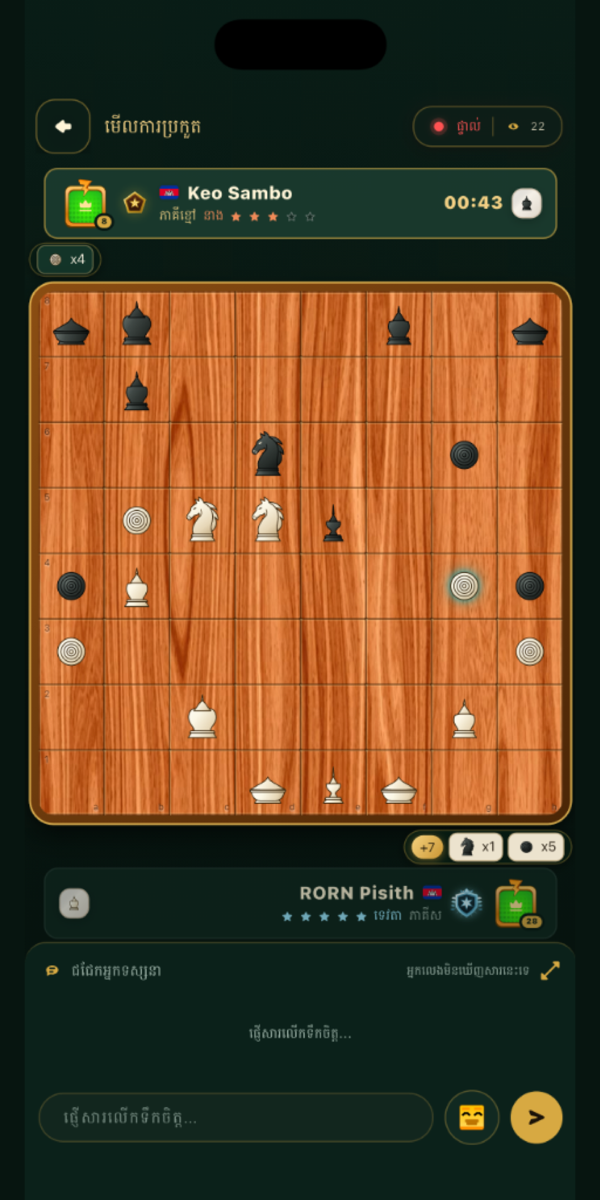
Living CultureSome ancient board games survive solely as glass-encased artifacts in museums. Ouk Chaktrang has taken the opposite path: it remains a vibrant, thriving, living tradition. Every morning in Phnom Penh, Siem Reap, and rural provinces, games unfold beneath pagoda canopies, in coffee stalls, at university halls, and on modern digital smartphones.
29. Historical Sources & Further Reading
31. Summary
Ouk Chaktrang is simultaneously an ancient-rooted Cambodian cultural treasure and a thriving modern competitive sport. Its origins trace to the grand tapestry of Asian chess antiquity; its physical footprint is immortalized upon the stone walls of Angkor; its heartbeat lives in every Cambodian village; and its future shines bright on the international stage.